Export Packing Explained: What an Export Wrap Really Is
Export Packing Explained: What an Export Wrap Really Is
Export packing prepares your household goods for an international journey that can last weeks, cross several climates and involve many changes of hands before your things reach your new home. It is a different standard from a UK house move, not domestic packing with extra tape. The phrase appears on almost every international removals quote, and very few quotes explain what it means.
This guide sets out what it involves for a family home, layer by layer and item by item. It's built around our own film of the crew on day one of a three-day international pack in a London client's home.
In this guide
- What it is export packing
- The export wrap, layer by layer
- On a real job
- Glassware and crockery
- When to crate
- How long it takes
- Customs and insurance
- Our approach
- Frequently asked questions
What is export packing in a house move?
Export packing is the preparation of household goods to survive international shipping. It uses heavier materials, several protective layers, moisture barriers and timber crates for fragile or valuable pieces. Every item is wrapped individually, numbered and recorded on an inventory. Sea freight brings humidity, constant vibration, temperature swings and repeated handling, and export packing is built for all four.
| Aspect | Domestic packing | Export packing |
|---|---|---|
| Cartons | Single-wall, often reused | Double-wall, new |
| Furniture protection | Removal blankets, reusable covers | Several sealed layers, specific to each item |
| Inventory | Room-by-room list | Numbered line-by-line list, used for customs and insurance |
| Crating | Rare | Standard for art, stone, glass and antiques |
| Moisture control | None | Vapour barriers and desiccant |
| Timber | Not applicable | ISPM 15 treated and stamped |
| Time on site | Usually one day for a family home | Two to four days for the same home |
If you're comparing packing and moving services in London for an overseas move, this table is a good test of any quote. Ask which column the crew will be working to.
What is an export wrap?
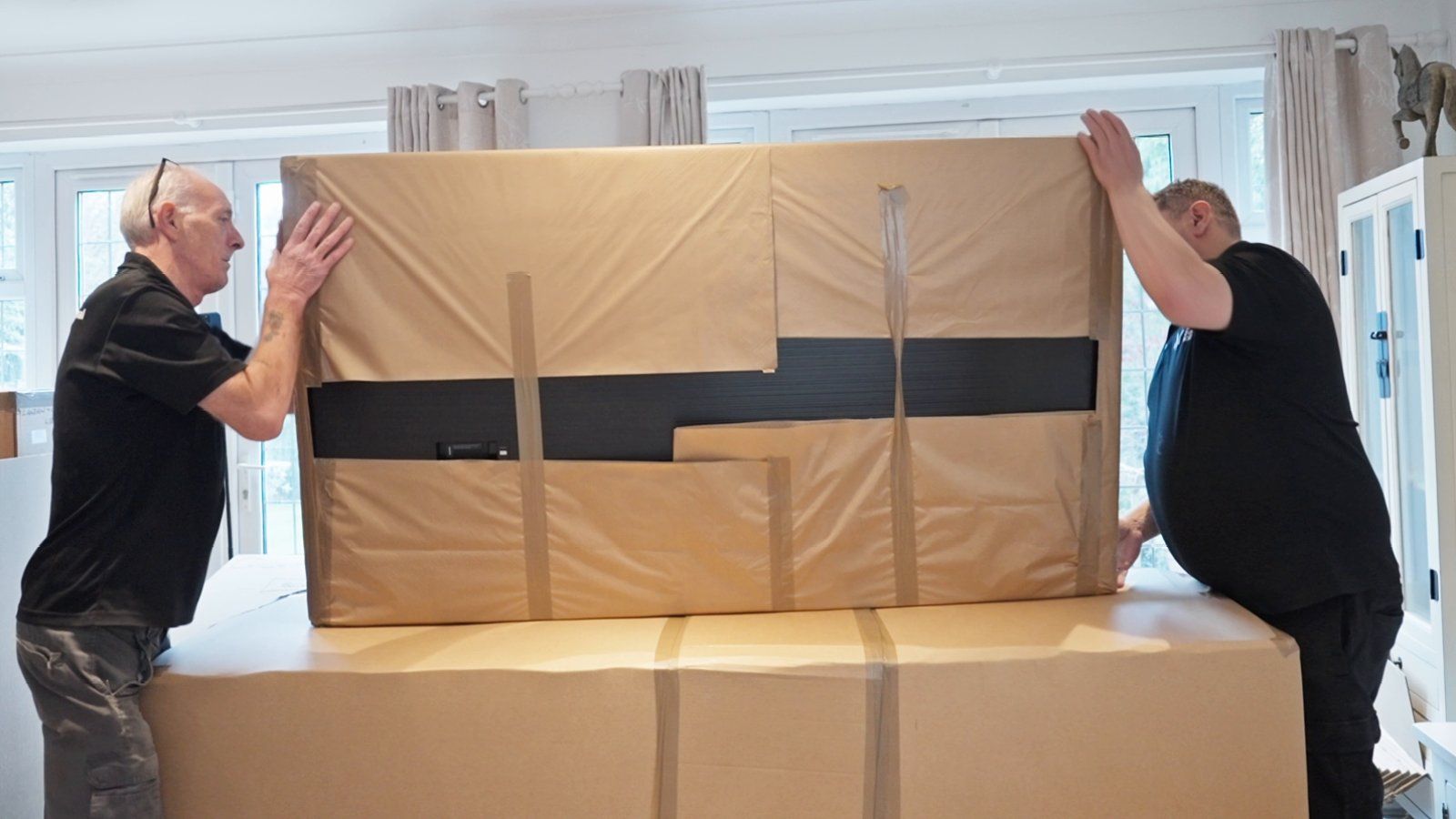
An export wrap is a layered system, typically four to six layers depending on the item. Working outwards from the surface, each layer deals with a specific transit risk. The order matters as much as the materials: the wrong material against a polished surface can damage it on its own.
- Surface layer. Acid-free tissue or soft non-woven fabric sits against the item. Bubble wrap placed straight onto a polished table can mark the finish in a warm container, and newsprint transfers ink onto marble and pale upholstery.
- Cushioning. Foam, bubble or corrugated wrap absorbs the constant low vibration of a sea crossing and the sudden knocks of handling and road transport.
- Moisture barrier. Heavy-gauge polythene or a sealed barrier bag keeps out humidity. Containers "sweat": warm, damp air loaded in London condenses on the steel walls as conditions change. Desiccant can be added for leather, instruments, timber and papers.
- Rigid protection. Edge protectors, corner blocks, double-wall cartons and timber cases resist crushing when other goods are stacked alongside.
- Outer layer and marking. Export-grade card takes the scuffs. The inventory number and handling marks go on the outside, large enough to read in a dim container.
Export wrapping is the hands-on part of the job. The wrap protects the item, and the inventory tells everyone along the route what it is and how to handle it.
What does export packing look like on a real job?
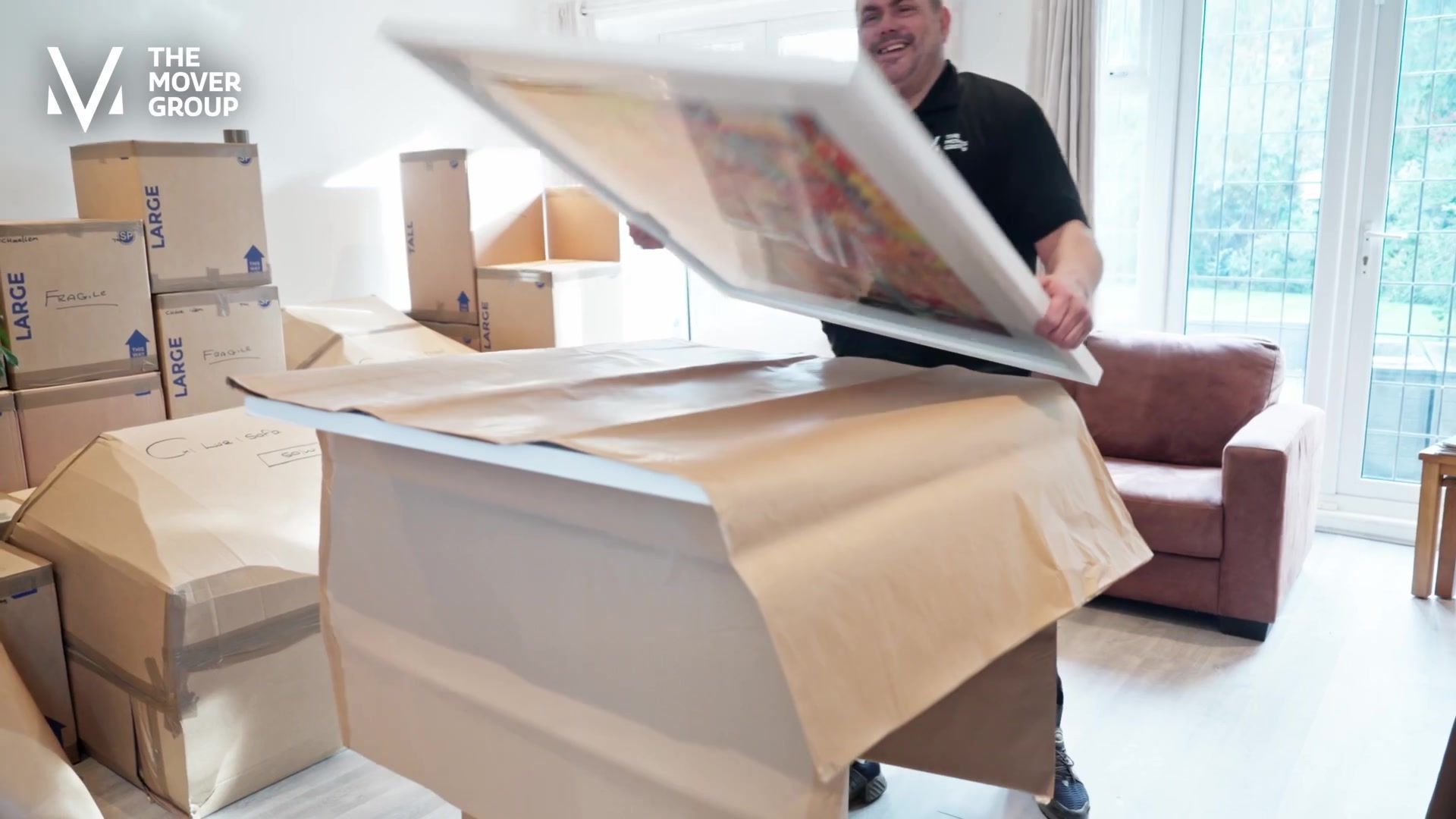
In our film pubished in our guide to white-glove movers in London, Onkar Sharma walks through day one of a three-day international pack in a client's London home. Three moments show the standard better than any description.
- The chair. "Chris is packing the chair here with paper blankets initially, and then afterwards he'll overpack that with card." Paper blankets protect the surface. Card overpacking gives the rigid outer layer.
- The crockery. "Tony loves packing crockery and glassware. It does take the longest time though, the least amount of lifting." Fragile kitchenware is slow, careful work rather than heavy work.
- The artwork. The client is an artist with many framed pictures, so crates were ordered for the following day. The packing method was chosen around the client and what she owns.
As Onkar puts it in the film: "We don't want any damage, we don't want anything broken. We want everything arriving in perfect condition."
How are glassware and crockery packed for export?
Glassware and crockery are packed one piece at a time. Each piece is wrapped in clean packing paper, cushioned, and stood on its edge in a double-wall carton, with padding above and below so nothing touches. Each carton is labelled fragile, numbered and listed on the inventory. It's the slowest job in an export pack.
What a professional crew does differently:
- Plates travel on their edge, not stacked flat, because edges take pressure better than faces.
- Stemware gets extra padding inside the bowl and around the stem.
- Cartons are filled so the contents can't move, then sealed and marked "this way up".
- Heavy items go in the bottom of a carton, lighter pieces on top, and cartons stay at a weight one person can lift safely.
If you're packing glassware for a UK move, the same principles apply. For a sea crossing, how thoroughly it's done is what changes the outcome.
When does furniture or artwork need a wooden crate?
A timber crate is used when an item could break if crushed or bent, or if it's valuable or can't be replaced. That includes mirrors, glass and marble tops, framed artwork, chandeliers and fragile antiques. A crate is built to the size of the piece, with internal padding so the item sits inside the case rather than pressed against it.
| Item | Typical export protection | Main risk addressed |
|---|---|---|
| Upholstered sofa | Soft layer, foam, sealed polythene, corner protection, card outer | Moisture, mould, abrasion |
| Polished dining table | Tissue, foam, polythene, card case; legs removed and wrapped separately | Surface marks, joint stress |
| Framed artwork | Tissue or glassine face, foam board, sealed bag, timber crate | Humidity, puncture, vibration |
| Flat-screen TV | Foam screen protection, double-wall carton or crate, kept upright | Panel cracking |
| Marble tabletop | Tissue, foam, full timber crate, stowed on its edge | Fracture |
| Chandelier | Dismantled, each arm wrapped, compartmented crate, photographed for reassembly | Breakage, reassembly errors |
Why the timber has to be ISPM 15 compliant
Solid timber used in crates, pallets and bracing for international shipping must meet ISPM 15, the international standard for wood packaging material set under the International Plant Protection Convention. The wood is treated and stamped with a registered mark. Without the stamp, a shipment can be held at the destination for treatment or refused entry.
How long does export packing take for a family home?
For a typical London home, it takes two to four days: about one to two days for a two-bedroom flat, two to four for a four-bedroom house, and longer where there's significant artwork, antiques or a piano. The pack in our film was a three-day job.
Access matters as much as volume. A fifth-floor flat with a small lift takes longer than a house with a driveway.
The process runs in three stages:
- Survey. We walk every room, decide which items need crating, note access and parking, and record existing damage so everyone agrees the condition of each item before packing starts.
- Packing and crating. The crew works room by room, never mixing rooms in a carton. Furniture is dismantled with fixings bagged and taped to the right piece. Electronics are photographed before disconnection.
- Loading. Heavy cased items go at the base and gaps are braced so nothing shifts. Upholstery is kept off the container walls, where condensation runs. The container is sealed and the seal number recorded.
Why does the packing standard matter for customs and insurance?
The inventory made during packing becomes a customs document. It forms the packing list that travels with your shipment and supports your import declarations at destination. Vague lines such as "box, misc" invite a physical examination, which costs time and money. Clear lines such as "Carton 042, kitchen, crockery and glassware" make clearance smoother.
Insurance depends on packing too. Transit insurance is optional, at the declared value of your goods, and cover for owner-packed cartons is usually more restricted. If a dinner service breaks inside a box you packed yourself and the box shows no outside damage, a claim is unlikely to succeed. Items should also be valued at survey, not after packing.
Different destinations have their own paperwork. Our guides to moving to New York from the UK and UK to India removals cover the customs side for each route.
How does The Mover Group approach export packing?
It is part of every international move we manage. Our own crew carries it out, every client has a personal move manager, and customs clearance is included in the relocations we manage. After a free survey you get a fixed price for the agreed inventory, revised only if you add items afterwards. Packing labour, materials and crating are specified in the quote.
The Mover Group is an IAM Premier Member, the highest tier of the International Association of Movers. Our founder, Onkar Sharma, brings 30+ years of personal experience in international removals, and he sets the packing standard with people who have unpacked at the other end and seen what fails.
If you want to know what packing would cost for your home, our guide to packing service costs in London covers what's included and what it costs. For the full service standard, from crew vetting to discretion, see white-glove movers in London.
Frequently asked questions
Is export packing included in an international removals quote?
With us, yes. Packing labour, materials and any crating are specified in the fixed price issued after your survey. Be wary of quotes that list packing as "to be confirmed", because the figure can rise once crating needs are identified.
Can I pack my own belongings for an international move?
You can, but it usually restricts your insurance cover. Policies often exclude breakage inside owner-packed cartons unless the carton itself is damaged. For anything fragile, valuable or irreplaceable, a professional export packing service is the safer choice.
How long does export packing take?
Typically two to four days for a family home in London: one to two days for a two-bed flat, two to four for a four-bed house, and longer with artwork, antiques or a piano. Access, lifts and parking affect the schedule as much as volume.
What is an export wrap?
An export wrap is a layered protective system: a soft surface layer, cushioning, a moisture barrier, rigid edge or corner protection, and an outer layer marked with the inventory number. Each layer addresses a specific risk of sea or air freight.
Does export packing protect against humidity in a shipping container?
Yes. Sealed polythene, vapour-barrier bags and desiccant protect against container "sweat", the condensation that forms on steel walls during a sea crossing. Keeping upholstery and timber away from the container walls during loading reduces the risk further.
What is ISPM 15 and does it apply to my move?
ISPM 15 is the international standard for wood packaging. Any timber crate, pallet or bracing used in your international shipment must be treated and stamped. Without the mark, goods can be held or refused at the destination.
Planning an international move from London?
Whether you're heading to New York, India, the Gulf or elsewhere, start with a free home or video survey. We'll write a packing specification for your home, give you a fixed price for the agreed inventory and assign a personal move manager who stays with you until the last carton is unpacked.
Explore The International Mover or The Indian Mover, call 0203 318 2216, email sales@themovergroup.com or book your survey.
Every move is personal.